

When it comes to “Prefabricated houses,” not everyone may be familiar with the concept. This type of construction has gained popularity in Vietnam, primarily in the form of homestays, tourist architecture, and various company workshops. However, in recent years, Prefabricated houses have also started to be recognized for residential use. So, what makes Prefabricated houses special, and how are they constructed? Let’s explore this further in the article below!
What is a Prefabricated House?
A Prefabricated house, as the name suggests, is a type of construction assembled from lightweight materials that have been pre-manufactured. By following proper assembly techniques, these materials come together to create a sturdy structure. The materials used for Prefabricated houses vary and can include AAC blocks, lightweight wood, or light steel. However, the most commonly used material is light steel, which is highly regarded for its quality, cost-effectiveness, and aesthetic appeal.

Prefab House
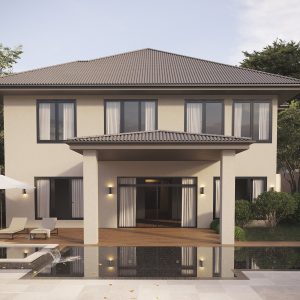
Prefab House
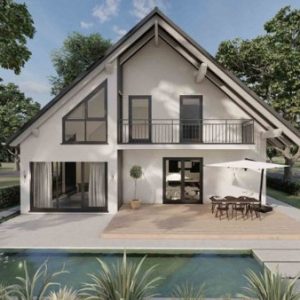
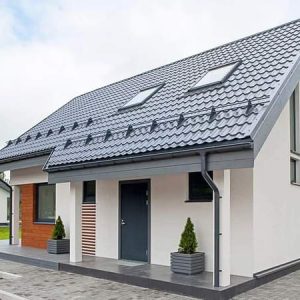
Prefab House

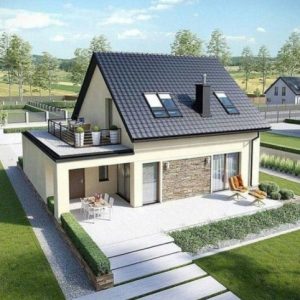


Although Prefabricated houses do not require solid foundations, they are comparable in sturdiness and longevity to traditional brick houses, often at a more optimized cost. Currently, Prefabricated homes are increasingly popular for various applications, including factories, companies, homestays, and residential buildings, thanks to their numerous advantages.
Prefabricated houses are primarily divided into two types: partially Prefabricated and fully Prefabricated . Each type has its own unique advantages and disadvantages. Depending on individual needs and investment budgets, different users can choose the most suitable type of Prefabricated house for their situation.
Structure of Prefabricated Houses
To complete a fully assembled house, it consists of more than just one or two components. It can be referred to as an entire construction project that includes:
- The types of frames, beams, and purlins are chosen from CT3 steel, U-shaped steel, or hollow steel. These are all made from sturdy, solid metal materials that are highly durable. They do not rust or deform when exposed to environmental impacts over long periods of use.
- The roof covering and wall partitions are mostly made from double-sided corrugated iron. To reduce noise and provide good thermal insulation, a layer of foam is designed in the middle. This ensures both structural integrity and soundproofing while maintaining high aesthetic appeal.
- The roof is made from specialized roofing materials that are highly effective at resisting lightning and strong winds.
- A solid bracing system protects against adverse weather conditions, ensuring safety for the occupants during their stay.
Moreover, a drainage system is essential for a Prefabricated house. This system is designed at the top of the roof to facilitate water drainage during rain and windy conditions, ensuring that the house remains dry and ventilated at all times.
Key Advantages of Building Prefabricated Houses Compared to Traditional Construction
Nowadays, Prefabricated housing is becoming increasingly popular, gradually attracting not only large companies but also households. This is because of the quick construction time, diverse and impressive designs, and the fact that they are just as complete as traditional houses. Prefabricated homes have many advantages:
- Short Construction Time: Traditional construction can take up to a year or more to complete a house. However, with Prefabricated homes, the construction time can be reduced to just one-fifth of traditional building time. Depending on the scale of the Prefabricated home, it can take only 1 to 2 months. This is considered a fantastic advantage that Prefabricated housing uniquely offers.
- Lower Construction Costs: Construction costs are one of the top concerns when building a home. Many investors worry that their budget won’t be sufficient for their dream house. However, Prefabricated homes alleviate these worries. Compared to traditional construction, the costs of Prefabricated homes are significantly lower. This is because the quick construction time reduces labor costs, and lightweight materials are also more affordable, saving investors a lot in construction expenses.
- Environmentally Friendly: Prefabricated homes are built entirely from pre-manufactured materials assembled in factories. Therefore, direct construction minimizes harmful emissions into the environment. Additionally, the materials used in Prefabricated homes are safe and environmentally friendly.
- Flexible and Easy to Modify: This is an advantage that traditional construction often lacks. Prefabricated homes are fixed and connected entirely with screws and bolts, making them easy to disassemble and move to a different location if desired. Thus, expanding or renovating is straightforward and doesn’t require much time or cost.
- Can Be Built on Small Lots: For families with limited land, constructing a house can be challenging. Prefabricated homes resolve this issue quickly, as beautiful mini Prefabricated designs can fit into small spaces.
Diversity in design. Currently, prefabricated houses have many beautiful, modern designs. There are also many different styles. Therefore, investors can easily choose impressive house models, with modern design style or any style they like
Disadvantages of Prefabricated Homes
Despite having many outstanding advantages, Prefabricated homes still have some minor drawbacks. One of these is that the lifespan of a Prefabricated home is generally shorter than that of a traditionally built house, with an expected usage of around 40 years. Furthermore, constructing a Prefabricated home requires relatively large machinery and technical expertise. Therefore, the construction site must also be adequately spacious to successfully complete the Prefabricated home.
Applications of Prefabricated Homes
Prefabricated homes have become increasingly familiar to the Vietnamese people in recent years. This is due to their numerous advantages and benefits. Additionally, modern life has led to a desire for speed and convenience, even in home construction. As a result, instead of taking a year to build a traditional home, Prefabricated homes have gained more attention.
Prefabricated homes have diverse applications and can be used for all types of buildings, including guesthouses, residential homes, industrial facilities, warehouses, offices, restaurants, and cafes. In general, Prefabricated homes can be applied in the same way as traditional construction, but with optimized time and costs.
Price Quotation for Prefabricated Homes
To provide an accurate price for Prefabricated homes, customers are kindly requested to contact our company directly. The cost of Prefabricated homes depends on various factors.
- Time of Material Purchase: The price of materials can change depending on the time of purchase. Additionally, the types of materials required to complete the Prefabricated home as per customer specifications may vary.
- Design and Size of the Home: Larger homes with more complex designs will have different pricing compared to smaller, simpler ones. The cost can be calculated based on the building area of the Prefabricated home.
- Construction Location: Price differences may arise based on location due to transportation costs. Sites that are difficult to access or farther away will generally incur higher costs compared to those that are easy to reach.
- Completion Time: The shorter the construction time for a Prefabricated home, the lower the cost will be, and vice versa.
Therefore, if you are interested in Prefabricated homes and need support or consultation, please contact us promptly. Our consulting team is always ready to assist customers whenever you need support.
Leading Provider and Contractor of Prefabricated Homes
Our company proudly stands as a top manufacturer and contractor of Prefabricated homes in the current market. Over many years of operation, we have consistently earned the trust of our customers, who turn to us whenever they have a need for Prefabricated housing. Our reputation today is the result of our efforts to help clients maximize their investment costs while still being able to own beautifully designed homes with the most modern architecture.
To meet the growing demand for Prefabricated homes from customers across provinces, we operate a large factory equipped with a modern production line that meets European standards. Therefore, we are confident in our ability to fulfill all customer requirements.
All Prefabricated homes we produce and install are made from ultra-lightweight materials with high durability, ensuring both sturdiness and aesthetic appeal. We guarantee that all materials have a clear origin, providing a lifespan of several decades for the Prefabricated homes. This facilitates investment opportunities for those looking to save on costs and time in building residences, homestays, companies, offices, warehouses, and workshops.
To deliver effective and perfect Prefabricated homes, we are supported by a professional and experienced team. We are committed to completing Prefabricated homes in the shortest time possible and take pride in being the contractor with the best quality and competitive prices.
Through this article, we hope you have gained a better understanding of Prefabricated homes. If you still have questions or require assistance regarding Prefabricated housing, please do not hesitate to contact us directly!
 Chat với tư vấn viên
 Gọi ngay